
The Tragic Passing of Gabriel Oluwasegun Olanrewaju
Neusroom investigates the death of Gabriel Oluwasegun Olanrewaju, a 40-year-old former Nigerian boxer who died after collapsing during a bout in Ghana.

Written by Tomiwo Ojo for Neusroom
April 7, 2025
This was not the plan at all. He was just to come and fight, enjoy it, make his money, go back home, have fun with his family, and everything else. If I tell you I’ve been OK since last night, then I have lied to you.
On the evening of March 29, 2025, the Bukom Boxing Arena in Accra, Ghana, was abuzz with anticipation. While football remains the most popular sport in Ghana, like the rest of West Africa, some loyal fans gathered to witness a light-heavyweight clash between Nigeria’s Gabriel Oluwasegun Olanrewaju and Ghana’s Jonathan Mbanugu.
Olanrewaju, at 40, was a veteran of the sport and had carved a name for himself in Nigerian boxing, claiming national and West African championship titles. He stepped into the bout with a record of 23 fights, 8 defeats and 13 victories, with 12 of them by way of knockout. This fight in Ghana, over 8 rounds on the Imax Boxing Promotions fight bill for the Bel 7star energy drink professional boxing league, was another step in a comeback journey, an opportunity to remind the continent of his talent and resilience. He would also make some money on the side.
But that night, something went terribly wrong.
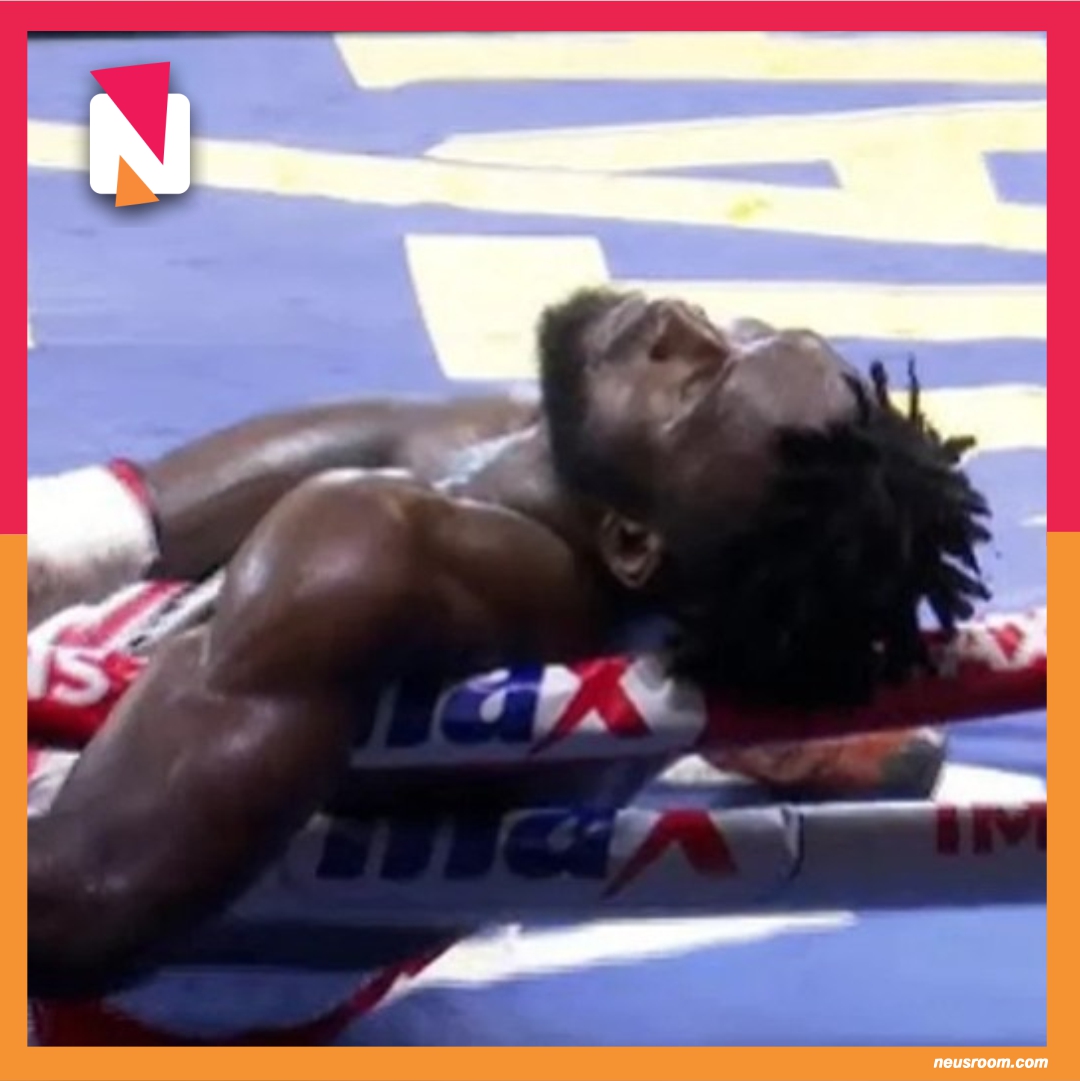
In the third round of the bout, Olanrewaju staggered backwards unsteadily without receiving any killer punch and collapsed into the ropes without warning. Richard Amevi, the referee, started counting before he realised that this was unusual and immediately signaled for medical assistance. Ringside doctors rushed in, and he was stretchered out and taken to the Korle-Bu Teaching Hospital, where doctors battled to save his life.
Despite their best efforts, Gabriel Oluwasegun Olanrewaju was pronounced dead within hours.
Mubarak Yusif Nanor, the Ghanaian matchmaker responsible for organizing the event, who was present through it all, recounted the desperate efforts to save Olanrewaju to Neusroom:
“Yeah, I was there. I’m the matchmaker for the event, so I was there. I was there when they rushed him to the hospital. I followed them. When we got to the hospital, the doctors, like 6 to 7 doctors, were on board, just trying to revive him.”
“It was devastating and we in Nigeria have been thrown into mourning. How can a former Nigerian champion go for a fight in Ghana and die in the ring? The rule of the game is that 24 hours before a fight, you must do your medical and weigh-in, and the weigh-in was done but medical was not done and the medical is the most important aspect.”
However, GBA spokesperson Amin Lamptey defended their procedures, claiming that all necessary protocols were followed. “What happened is very sad and all of us here commiserate with his family,” Lamptey told The PUNCH, a Nigerian news outlet.
He was supposed to fight on Friday, but the fight couldn’t come up, so the promoter connected with the Ghana Boxing Authority, requested that he be on the undercard of the next fight. His information was already with us, as it was for the previous fight, his records, the reports, and his credibility as a former champion.
We know his history, and in Ghana, we had to check this thing as an organisation before the fight was approved.
Coach Austin Okporu, who accompanied another Nigerian boxer to Ghana, corroborated the NBBofC’s concerns about medical protocols. “Even me and the boxer that went for the fight, no medical was done before our fight. I even asked them, ‘Where are the medical personnel for the fight’. It is only a weigh-in and then, they fight,”
In a long chat with Neusroom, Remi Aboderin, respected boxing promoter and secretary of the NBBofC listed three ways the GBA erred and why there is demand for compensation and investigation.
We gave Segun a release letter to go and fight in Ghana on the 28th of March 2025. When he got to Ghana, some of the things that were supposed to be done, like the medicals, were not done.
Aboderin also pointed out concerns over Olanrewaju’s weight. The Nigerian boxer was supposed to compete in the light-heavyweight category, which had a weight limit of 79 to 80 kg. However, upon arrival in Ghana, he was found to have exceeded that limit.
On Thursday, the day before the main fight, there was a weigh-in, and it was discovered that Segun was overweight. The release letter approved him to fight in the light-heavyweight category, that is between 76 kg and 79 kg. When he stepped on the scale in Ghana, he was weighing more than 80 kg.
 If he were weighing 81 or 82, he would have to fight in a different category, and that is not what we had approved for him to fight in. What the GBA should have said is ‘go back, go and train, and make the agreed weight.’ They did not. That is the second area where they erred.
We did not approve for Segun to go and fight on the twenty-ninth, yet they allowed him to fight on the 29th. No medicals were done, and no weigh-in was done. The stress of returning to Nigeria and turning back mid-way was not considered.
Segun eventually got into the ring, and the unfortunate thing happened.
Now, who is to blame? The GBA for not following the rules of the game, and I’m not happy saying this.
When Neusroom asked Mubarak Yussif, the matchmaker, about the NBBofC not approving the fight for the 29th, he said, “Kindly ask them how the boxer got here then. No boxer can travel to fight outside his/her country without a release letter. So just ask how did the boxer get here?”
Further enquiries about the actual date on the release letter and the suggestion to throw the match on the 28th were not responded to. The coach who accompanied the late boxer to Ghana “was not himself” when Neusroom attempted to speak with him on the day after the boxer’s death was announced; further attempts to reach him have been unsuccessful.
 Olanrewaju’s tragic passing is not the first time the sport of boxing has been marred by fatality. From Patrick Day, the American boxer who suffered a brain injury and died four days after being knocked out in 2019, to Russia’s Dadashev, who died the same year after a fight with Subriel Matias, numerous fighters have lost their lives in the ring.
In fact, boxers are explicitly informed of the risks of fighting ahead of every match, and they are required to sign an indemnity form in case of injuries or death. Remi Aboderin told Neusroom that “A boxer is a soldier, a ring soldier. He knows that boxing is a dangerous sport, but like every soldier going to war, it’s either he wins or he’s defeated. The only prayer of the ring soldier is that even if I’m defeated, it should not lead to death, so that I can still collect the money that was agreed upon.
The indemnity clause in a boxing match contract relieves the authority, the promoter, the manager, or the opposing boxer from being accused, harassed, or intimidated in the case of any problems or disabilities that may arise from the fight.
Segun knew the business he was involved in and how dangerous it was. Any professional boxer who agrees to fight knows the implications. If he has agreed to fight and he has signed, then the promoter, the manager of the opposing boxer, and the commission are relieved of any issues if what happens is not a good result.
But that can only be done if all the rules and regulations are followed. The GBA did not follow the rules and regulations, which is why we’re saying they are culpable for his death. We believe that the amount of money that Segun signed to collect must be paid before we talk about compensation, which must also be done.
When Neusroom spoke to the Ghana Boxing Federation, a Communications Officer said that Koffi Adams, the Ghanaian Minister of Sports and Recreation, has ordered an inquiry into his death.
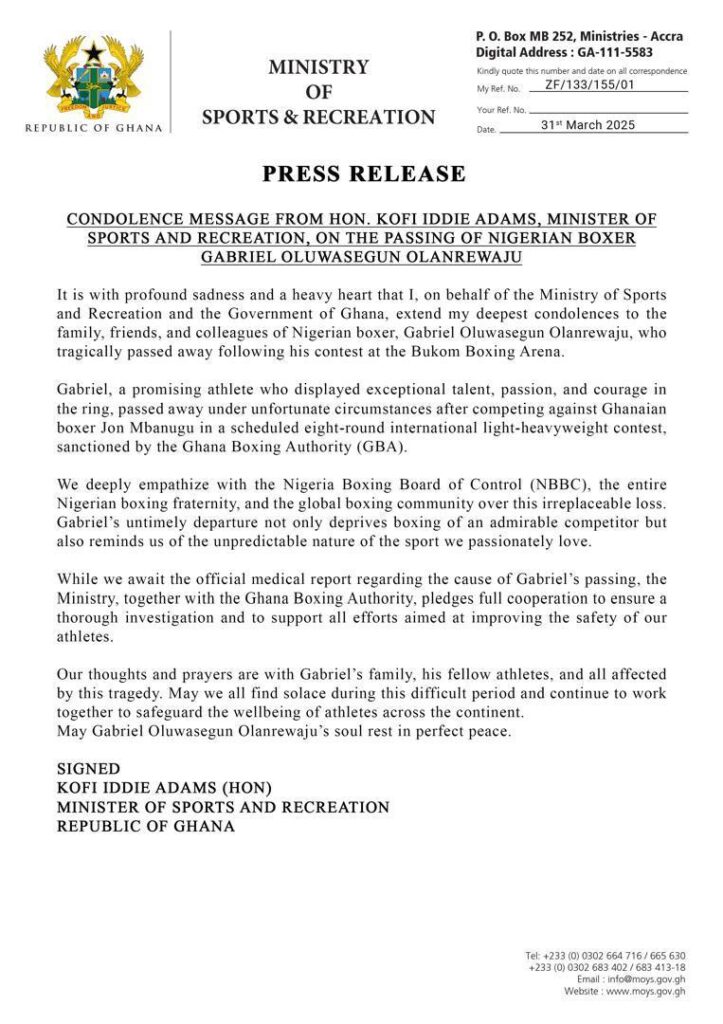
Condolence message from Kofi Adams, Ghana’s Minister of Sports & Recreation (Photo: Ghana’s Minister of Sports & Recreation)
The statement shared with Neusroom reads: “While we await the official medical report regarding the cause of death, the ministry together with the Ghana Boxing Authority pledges full cooperation to ensure a thorough investigation and to support all efforts aimed at safeguarding our athlete’s health. ”
As the boxing world mourns, Olanrewaju’s legacy lives on, but this is not how he would have wanted to be remembered. The NBBofC has paid a condolence visit to his family and declared that boxing activities will be suspended for the next two weeks to honour him.
Gabriel Oluwasegun Olanrewaju after he collapsed in the ring
“It was devastating and we in Nigeria have been thrown into mourning. How can a former Nigerian champion go for a fight in Ghana and die in the ring? The rule of the game is that 24 hours before a fight, you must do your medical and weigh-in, and the weigh-in was done but medical was not done and the medical is the most important aspect.”
However, GBA spokesperson Amin Lamptey defended their procedures, claiming that all necessary protocols were followed. “What happened is very sad and all of us here commiserate with his family,” Lamptey told The PUNCH, a Nigerian news outlet.
He was supposed to fight on Friday, but the fight couldn’t come up, so the promoter connected with the Ghana Boxing Authority, requested that he be on the undercard of the next fight. His information was already with us, as it was for the previous fight, his records, the reports, and his credibility as a former champion.
We know his history, and in Ghana, we had to check this thing as an organisation before the fight was approved.
Coach Austin Okporu, who accompanied another Nigerian boxer to Ghana, corroborated the NBBofC’s concerns about medical protocols. “Even me and the boxer that went for the fight, no medical was done before our fight. I even asked them, ‘Where are the medical personnel for the fight’. It is only a weigh-in and then, they fight,”
In a long chat with Neusroom, Remi Aboderin, respected boxing promoter and secretary of the NBBofC listed three ways the GBA erred and why there is demand for compensation and investigation.
We gave Segun a release letter to go and fight in Ghana on the 28th of March 2025. When he got to Ghana, some of the things that were supposed to be done, like the medicals, were not done.
Aboderin also pointed out concerns over Olanrewaju’s weight. The Nigerian boxer was supposed to compete in the light-heavyweight category, which had a weight limit of 79 to 80 kg. However, upon arrival in Ghana, he was found to have exceeded that limit.
On Thursday, the day before the main fight, there was a weigh-in, and it was discovered that Segun was overweight. The release letter approved him to fight in the light-heavyweight category, that is between 76 kg and 79 kg. When he stepped on the scale in Ghana, he was weighing more than 80 kg.
If he were weighing 81 or 82, he would have to fight in a different category, and that is not what we had approved for him to fight in. What the GBA should have said is ‘go back, go and train, and make the agreed weight.’ They did not. That is the second area where they erred.
We did not approve for Segun to go and fight on the twenty-ninth, yet they allowed him to fight on the 29th. No medicals were done, and no weigh-in was done. The stress of returning to Nigeria and turning back mid-way was not considered.
Segun eventually got into the ring, and the unfortunate thing happened.
Now, who is to blame? The GBA for not following the rules of the game, and I’m not happy saying this.
When Neusroom asked Mubarak Yussif, the matchmaker, about the NBBofC not approving the fight for the 29th, he said, “Kindly ask them how the boxer got here then. No boxer can travel to fight outside his/her country without a release letter. So just ask how did the boxer get here?”
Further enquiries about the actual date on the release letter and the suggestion to throw the match on the 28th were not responded to. The coach who accompanied the late boxer to Ghana “was not himself” when Neusroom attempted to speak with him on the day after the boxer’s death was announced; further attempts to reach him have been unsuccessful.
Olanrewaju’s tragic passing is not the first time the sport of boxing has been marred by fatality. From Patrick Day, the American boxer who suffered a brain injury and died four days after being knocked out in 2019, to Russia’s Dadashev, who died the same year after a fight with Subriel Matias, numerous fighters have lost their lives in the ring.
In fact, boxers are explicitly informed of the risks of fighting ahead of every match, and they are required to sign an indemnity form in case of injuries or death. Remi Aboderin told Neusroom that “A boxer is a soldier, a ring soldier. He knows that boxing is a dangerous sport, but like every soldier going to war, it’s either he wins or he’s defeated. The only prayer of the ring soldier is that even if I’m defeated, it should not lead to death, so that I can still collect the money that was agreed upon.
The indemnity clause in a boxing match contract relieves the authority, the promoter, the manager, or the opposing boxer from being accused, harassed, or intimidated in the case of any problems or disabilities that may arise from the fight.
Segun knew the business he was involved in and how dangerous it was. Any professional boxer who agrees to fight knows the implications. If he has agreed to fight and he has signed, then the promoter, the manager of the opposing boxer, and the commission are relieved of any issues if what happens is not a good result.
But that can only be done if all the rules and regulations are followed. The GBA did not follow the rules and regulations, which is why we’re saying they are culpable for his death. We believe that the amount of money that Segun signed to collect must be paid before we talk about compensation, which must also be done.
When Neusroom spoke to the Ghana Boxing Federation, a Communications Officer said that Koffi Adams, the Ghanaian Minister of Sports and Recreation, has ordered an inquiry into his death.
Condolence message from Kofi Adams, Ghana’s Minister of Sports & Recreation (Photo: Ghana’s Minister of Sports & Recreation)
The statement shared with Neusroom reads: “While we await the official medical report regarding the cause of death, the ministry together with the Ghana Boxing Authority pledges full cooperation to ensure a thorough investigation and to support all efforts aimed at safeguarding our athlete’s health. ”
As the boxing world mourns, Olanrewaju’s legacy lives on, but this is not how he would have wanted to be remembered. The NBBofC has paid a condolence visit to his family and declared that boxing activities will be suspended for the next two weeks to honour him.
[/vc_column_text][/vc_column][/vc_row]Gabriel Oluwasegun Olanrewaju after he collapsed in the ring
“It was devastating and we in Nigeria have been thrown into mourning. How can a former Nigerian champion go for a fight in Ghana and die in the ring? The rule of the game is that 24 hours before a fight, you must do your medical and weigh-in, and the weigh-in was done but medical was not done and the medical is the most important aspect.”
However, GBA spokesperson Amin Lamptey defended their procedures, claiming that all necessary protocols were followed. “What happened is very sad and all of us here commiserate with his family,” Lamptey told The PUNCH, a Nigerian news outlet.
He was supposed to fight on Friday, but the fight couldn’t come up, so the promoter connected with the Ghana Boxing Authority, requested that he be on the undercard of the next fight. His information was already with us, as it was for the previous fight, his records, the reports, and his credibility as a former champion.
We know his history, and in Ghana, we had to check this thing as an organisation before the fight was approved.
Coach Austin Okporu, who accompanied another Nigerian boxer to Ghana, corroborated the NBBofC’s concerns about medical protocols. “Even me and the boxer that went for the fight, no medical was done before our fight. I even asked them, ‘Where are the medical personnel for the fight’. It is only a weigh-in and then, they fight,”
In a long chat with Neusroom, Remi Aboderin, respected boxing promoter and secretary of the NBBofC listed three ways the GBA erred and why there is demand for compensation and investigation.
We gave Segun a release letter to go and fight in Ghana on the 28th of March 2025. When he got to Ghana, some of the things that were supposed to be done, like the medicals, were not done.
Aboderin also pointed out concerns over Olanrewaju’s weight. The Nigerian boxer was supposed to compete in the light-heavyweight category, which had a weight limit of 79 to 80 kg. However, upon arrival in Ghana, he was found to have exceeded that limit.
On Thursday, the day before the main fight, there was a weigh-in, and it was discovered that Segun was overweight. The release letter approved him to fight in the light-heavyweight category, that is between 76 kg and 79 kg. When he stepped on the scale in Ghana, he was weighing more than 80 kg.
If he were weighing 81 or 82, he would have to fight in a different category, and that is not what we had approved for him to fight in. What the GBA should have said is ‘go back, go and train, and make the agreed weight.’ They did not. That is the second area where they erred.
We did not approve for Segun to go and fight on the twenty-ninth, yet they allowed him to fight on the 29th. No medicals were done, and no weigh-in was done. The stress of returning to Nigeria and turning back mid-way was not considered.
Segun eventually got into the ring, and the unfortunate thing happened.
Now, who is to blame? The GBA for not following the rules of the game, and I’m not happy saying this.
When Neusroom asked Mubarak Yussif, the matchmaker, about the NBBofC not approving the fight for the 29th, he said, “Kindly ask them how the boxer got here then. No boxer can travel to fight outside his/her country without a release letter. So just ask how did the boxer get here?”
Further enquiries about the actual date on the release letter and the suggestion to throw the match on the 28th were not responded to. The coach who accompanied the late boxer to Ghana “was not himself” when Neusroom attempted to speak with him on the day after the boxer’s death was announced; further attempts to reach him have been unsuccessful.
Olanrewaju’s tragic passing is not the first time the sport of boxing has been marred by fatality. From Patrick Day, the American boxer who suffered a brain injury and died four days after being knocked out in 2019, to Russia’s Dadashev, who died the same year after a fight with Subriel Matias, numerous fighters have lost their lives in the ring.
In fact, boxers are explicitly informed of the risks of fighting ahead of every match, and they are required to sign an indemnity form in case of injuries or death. Remi Aboderin told Neusroom that “A boxer is a soldier, a ring soldier. He knows that boxing is a dangerous sport, but like every soldier going to war, it’s either he wins or he’s defeated. The only prayer of the ring soldier is that even if I’m defeated, it should not lead to death, so that I can still collect the money that was agreed upon.
The indemnity clause in a boxing match contract relieves the authority, the promoter, the manager, or the opposing boxer from being accused, harassed, or intimidated in the case of any problems or disabilities that may arise from the fight.
Segun knew the business he was involved in and how dangerous it was. Any professional boxer who agrees to fight knows the implications. If he has agreed to fight and he has signed, then the promoter, the manager of the opposing boxer, and the commission are relieved of any issues if what happens is not a good result.
But that can only be done if all the rules and regulations are followed. The GBA did not follow the rules and regulations, which is why we’re saying they are culpable for his death. We believe that the amount of money that Segun signed to collect must be paid before we talk about compensation, which must also be done.
When Neusroom spoke to the Ghana Boxing Federation, a Communications Officer said that Koffi Adams, the Ghanaian Minister of Sports and Recreation, has ordered an inquiry into his death.
Condolence message from Kofi Adams, Ghana’s Minister of Sports & Recreation (Photo: Ghana’s Minister of Sports & Recreation)
The statement shared with Neusroom reads: “While we await the official medical report regarding the cause of death, the ministry together with the Ghana Boxing Authority pledges full cooperation to ensure a thorough investigation and to support all efforts aimed at safeguarding our athlete’s health. ”
As the boxing world mourns, Olanrewaju’s legacy lives on, but this is not how he would have wanted to be remembered. The NBBofC has paid a condolence visit to his family and declared that boxing activities will be suspended for the next two weeks to honour him.
[/vc_column_text][/vc_column][/vc_row]But Olanrewaju never regained consciousness. His death sent shockwaves through the boxing community in Ghana and Nigeria, but there has been a lot of blame being thrown around.In the aftermath of the tragedy, several questions have arisen. The Nigerian Boxing Board of Control (NBBofC)has accused the Ghana Boxing Authority (GBA)of culpability in his death.
Chairman of the Nigeria Boxing Board of Control, Dr. Rafiu Ladipo, expressed outrage over the incident, questioning the medical protocols followed by Ghanaian authorities.
Gabriel Oluwasegun Olanrewaju after he collapsed in the ring
“It was devastating and we in Nigeria have been thrown into mourning. How can a former Nigerian champion go for a fight in Ghana and die in the ring? The rule of the game is that 24 hours before a fight, you must do your medical and weigh-in, and the weigh-in was done but medical was not done and the medical is the most important aspect.”
However, GBA spokesperson Amin Lamptey defended their procedures, claiming that all necessary protocols were followed. “What happened is very sad and all of us here commiserate with his family,” Lamptey told The PUNCH, a Nigerian news outlet.
He was supposed to fight on Friday, but the fight couldn’t come up, so the promoter connected with the Ghana Boxing Authority, requested that he be on the undercard of the next fight. His information was already with us, as it was for the previous fight, his records, the reports, and his credibility as a former champion.
We know his history, and in Ghana, we had to check this thing as an organisation before the fight was approved.
Coach Austin Okporu, who accompanied another Nigerian boxer to Ghana, corroborated the NBBofC’s concerns about medical protocols. “Even me and the boxer that went for the fight, no medical was done before our fight. I even asked them, ‘Where are the medical personnel for the fight’. It is only a weigh-in and then, they fight,”
In a long chat with Neusroom, Remi Aboderin, respected boxing promoter and secretary of the NBBofC listed three ways the GBA erred and why there is demand for compensation and investigation.
We gave Segun a release letter to go and fight in Ghana on the 28th of March 2025. When he got to Ghana, some of the things that were supposed to be done, like the medicals, were not done.
Aboderin also pointed out concerns over Olanrewaju’s weight. The Nigerian boxer was supposed to compete in the light-heavyweight category, which had a weight limit of 79 to 80 kg. However, upon arrival in Ghana, he was found to have exceeded that limit.
On Thursday, the day before the main fight, there was a weigh-in, and it was discovered that Segun was overweight. The release letter approved him to fight in the light-heavyweight category, that is between 76 kg and 79 kg. When he stepped on the scale in Ghana, he was weighing more than 80 kg.
If he were weighing 81 or 82, he would have to fight in a different category, and that is not what we had approved for him to fight in. What the GBA should have said is ‘go back, go and train, and make the agreed weight.’ They did not. That is the second area where they erred.
We did not approve for Segun to go and fight on the twenty-ninth, yet they allowed him to fight on the 29th. No medicals were done, and no weigh-in was done. The stress of returning to Nigeria and turning back mid-way was not considered.
Segun eventually got into the ring, and the unfortunate thing happened.
Now, who is to blame? The GBA for not following the rules of the game, and I’m not happy saying this.
When Neusroom asked Mubarak Yussif, the matchmaker, about the NBBofC not approving the fight for the 29th, he said, “Kindly ask them how the boxer got here then. No boxer can travel to fight outside his/her country without a release letter. So just ask how did the boxer get here?”
Further enquiries about the actual date on the release letter and the suggestion to throw the match on the 28th were not responded to. The coach who accompanied the late boxer to Ghana “was not himself” when Neusroom attempted to speak with him on the day after the boxer’s death was announced; further attempts to reach him have been unsuccessful.
Olanrewaju’s tragic passing is not the first time the sport of boxing has been marred by fatality. From Patrick Day, the American boxer who suffered a brain injury and died four days after being knocked out in 2019, to Russia’s Dadashev, who died the same year after a fight with Subriel Matias, numerous fighters have lost their lives in the ring.
In fact, boxers are explicitly informed of the risks of fighting ahead of every match, and they are required to sign an indemnity form in case of injuries or death. Remi Aboderin told Neusroom that “A boxer is a soldier, a ring soldier. He knows that boxing is a dangerous sport, but like every soldier going to war, it’s either he wins or he’s defeated. The only prayer of the ring soldier is that even if I’m defeated, it should not lead to death, so that I can still collect the money that was agreed upon.
The indemnity clause in a boxing match contract relieves the authority, the promoter, the manager, or the opposing boxer from being accused, harassed, or intimidated in the case of any problems or disabilities that may arise from the fight.
Segun knew the business he was involved in and how dangerous it was. Any professional boxer who agrees to fight knows the implications. If he has agreed to fight and he has signed, then the promoter, the manager of the opposing boxer, and the commission are relieved of any issues if what happens is not a good result.
But that can only be done if all the rules and regulations are followed. The GBA did not follow the rules and regulations, which is why we’re saying they are culpable for his death. We believe that the amount of money that Segun signed to collect must be paid before we talk about compensation, which must also be done.
When Neusroom spoke to the Ghana Boxing Federation, a Communications Officer said that Koffi Adams, the Ghanaian Minister of Sports and Recreation, has ordered an inquiry into his death.
Condolence message from Kofi Adams, Ghana’s Minister of Sports & Recreation (Photo: Ghana’s Minister of Sports & Recreation)
The statement shared with Neusroom reads: “While we await the official medical report regarding the cause of death, the ministry together with the Ghana Boxing Authority pledges full cooperation to ensure a thorough investigation and to support all efforts aimed at safeguarding our athlete’s health. ”
As the boxing world mourns, Olanrewaju’s legacy lives on, but this is not how he would have wanted to be remembered. The NBBofC has paid a condolence visit to his family and declared that boxing activities will be suspended for the next two weeks to honour him.
[/vc_column_text][/vc_column][/vc_row]But Olanrewaju never regained consciousness. His death sent shockwaves through the boxing community in Ghana and Nigeria, but there has been a lot of blame being thrown around.
In the aftermath of the tragedy, several questions have arisen. The Nigerian Boxing Board of Control (NBBofC)has accused the Ghana Boxing Authority (GBA)of culpability in his death.
Chairman of the Nigeria Boxing Board of Control, Dr. Rafiu Ladipo, expressed outrage over the incident, questioning the medical protocols followed by Ghanaian authorities.
Gabriel Oluwasegun Olanrewaju after he collapsed in the ring
“It was devastating and we in Nigeria have been thrown into mourning. How can a former Nigerian champion go for a fight in Ghana and die in the ring? The rule of the game is that 24 hours before a fight, you must do your medical and weigh-in, and the weigh-in was done but medical was not done and the medical is the most important aspect.”
However, GBA spokesperson Amin Lamptey defended their procedures, claiming that all necessary protocols were followed. “What happened is very sad and all of us here commiserate with his family,” Lamptey told The PUNCH, a Nigerian news outlet.
He was supposed to fight on Friday, but the fight couldn’t come up, so the promoter connected with the Ghana Boxing Authority, requested that he be on the undercard of the next fight. His information was already with us, as it was for the previous fight, his records, the reports, and his credibility as a former champion.
We know his history, and in Ghana, we had to check this thing as an organisation before the fight was approved.
Coach Austin Okporu, who accompanied another Nigerian boxer to Ghana, corroborated the NBBofC’s concerns about medical protocols. “Even me and the boxer that went for the fight, no medical was done before our fight. I even asked them, ‘Where are the medical personnel for the fight’. It is only a weigh-in and then, they fight,”
In a long chat with Neusroom, Remi Aboderin, respected boxing promoter and secretary of the NBBofC listed three ways the GBA erred and why there is demand for compensation and investigation.
We gave Segun a release letter to go and fight in Ghana on the 28th of March 2025. When he got to Ghana, some of the things that were supposed to be done, like the medicals, were not done.
Aboderin also pointed out concerns over Olanrewaju’s weight. The Nigerian boxer was supposed to compete in the light-heavyweight category, which had a weight limit of 79 to 80 kg. However, upon arrival in Ghana, he was found to have exceeded that limit.
On Thursday, the day before the main fight, there was a weigh-in, and it was discovered that Segun was overweight. The release letter approved him to fight in the light-heavyweight category, that is between 76 kg and 79 kg. When he stepped on the scale in Ghana, he was weighing more than 80 kg.
If he were weighing 81 or 82, he would have to fight in a different category, and that is not what we had approved for him to fight in. What the GBA should have said is ‘go back, go and train, and make the agreed weight.’ They did not. That is the second area where they erred.
We did not approve for Segun to go and fight on the twenty-ninth, yet they allowed him to fight on the 29th. No medicals were done, and no weigh-in was done. The stress of returning to Nigeria and turning back mid-way was not considered.
Segun eventually got into the ring, and the unfortunate thing happened.
Now, who is to blame? The GBA for not following the rules of the game, and I’m not happy saying this.
When Neusroom asked Mubarak Yussif, the matchmaker, about the NBBofC not approving the fight for the 29th, he said, “Kindly ask them how the boxer got here then. No boxer can travel to fight outside his/her country without a release letter. So just ask how did the boxer get here?”
Further enquiries about the actual date on the release letter and the suggestion to throw the match on the 28th were not responded to. The coach who accompanied the late boxer to Ghana “was not himself” when Neusroom attempted to speak with him on the day after the boxer’s death was announced; further attempts to reach him have been unsuccessful.
Olanrewaju’s tragic passing is not the first time the sport of boxing has been marred by fatality. From Patrick Day, the American boxer who suffered a brain injury and died four days after being knocked out in 2019, to Russia’s Dadashev, who died the same year after a fight with Subriel Matias, numerous fighters have lost their lives in the ring.
In fact, boxers are explicitly informed of the risks of fighting ahead of every match, and they are required to sign an indemnity form in case of injuries or death. Remi Aboderin told Neusroom that “A boxer is a soldier, a ring soldier. He knows that boxing is a dangerous sport, but like every soldier going to war, it’s either he wins or he’s defeated. The only prayer of the ring soldier is that even if I’m defeated, it should not lead to death, so that I can still collect the money that was agreed upon.
The indemnity clause in a boxing match contract relieves the authority, the promoter, the manager, or the opposing boxer from being accused, harassed, or intimidated in the case of any problems or disabilities that may arise from the fight.
Segun knew the business he was involved in and how dangerous it was. Any professional boxer who agrees to fight knows the implications. If he has agreed to fight and he has signed, then the promoter, the manager of the opposing boxer, and the commission are relieved of any issues if what happens is not a good result.
But that can only be done if all the rules and regulations are followed. The GBA did not follow the rules and regulations, which is why we’re saying they are culpable for his death. We believe that the amount of money that Segun signed to collect must be paid before we talk about compensation, which must also be done.
When Neusroom spoke to the Ghana Boxing Federation, a Communications Officer said that Koffi Adams, the Ghanaian Minister of Sports and Recreation, has ordered an inquiry into his death.
Condolence message from Kofi Adams, Ghana’s Minister of Sports & Recreation (Photo: Ghana’s Minister of Sports & Recreation)
The statement shared with Neusroom reads: “While we await the official medical report regarding the cause of death, the ministry together with the Ghana Boxing Authority pledges full cooperation to ensure a thorough investigation and to support all efforts aimed at safeguarding our athlete’s health. ”
As the boxing world mourns, Olanrewaju’s legacy lives on, but this is not how he would have wanted to be remembered. The NBBofC has paid a condolence visit to his family and declared that boxing activities will be suspended for the next two weeks to honour him.
[/vc_column_text][/vc_column][/vc_row]The team worked relentlessly, refusing to give up on the boxer.
“They spent almost 4 hours just trying to revive him. He responded a little when we first got to the hospital, I mean, we were there for almost like 4 hours just trying to, you know, revive him.”
But Olanrewaju never regained consciousness. His death sent shockwaves through the boxing community in Ghana and Nigeria, but there has been a lot of blame being thrown around.
In the aftermath of the tragedy, several questions have arisen. The Nigerian Boxing Board of Control (NBBofC)has accused the Ghana Boxing Authority (GBA)of culpability in his death.
Chairman of the Nigeria Boxing Board of Control, Dr. Rafiu Ladipo, expressed outrage over the incident, questioning the medical protocols followed by Ghanaian authorities.
Gabriel Oluwasegun Olanrewaju after he collapsed in the ring
“It was devastating and we in Nigeria have been thrown into mourning. How can a former Nigerian champion go for a fight in Ghana and die in the ring? The rule of the game is that 24 hours before a fight, you must do your medical and weigh-in, and the weigh-in was done but medical was not done and the medical is the most important aspect.”
However, GBA spokesperson Amin Lamptey defended their procedures, claiming that all necessary protocols were followed. “What happened is very sad and all of us here commiserate with his family,” Lamptey told The PUNCH, a Nigerian news outlet.
He was supposed to fight on Friday, but the fight couldn’t come up, so the promoter connected with the Ghana Boxing Authority, requested that he be on the undercard of the next fight. His information was already with us, as it was for the previous fight, his records, the reports, and his credibility as a former champion.
We know his history, and in Ghana, we had to check this thing as an organisation before the fight was approved.
Coach Austin Okporu, who accompanied another Nigerian boxer to Ghana, corroborated the NBBofC’s concerns about medical protocols. “Even me and the boxer that went for the fight, no medical was done before our fight. I even asked them, ‘Where are the medical personnel for the fight’. It is only a weigh-in and then, they fight,”
In a long chat with Neusroom, Remi Aboderin, respected boxing promoter and secretary of the NBBofC listed three ways the GBA erred and why there is demand for compensation and investigation.
We gave Segun a release letter to go and fight in Ghana on the 28th of March 2025. When he got to Ghana, some of the things that were supposed to be done, like the medicals, were not done.
Aboderin also pointed out concerns over Olanrewaju’s weight. The Nigerian boxer was supposed to compete in the light-heavyweight category, which had a weight limit of 79 to 80 kg. However, upon arrival in Ghana, he was found to have exceeded that limit.
On Thursday, the day before the main fight, there was a weigh-in, and it was discovered that Segun was overweight. The release letter approved him to fight in the light-heavyweight category, that is between 76 kg and 79 kg. When he stepped on the scale in Ghana, he was weighing more than 80 kg.
If he were weighing 81 or 82, he would have to fight in a different category, and that is not what we had approved for him to fight in. What the GBA should have said is ‘go back, go and train, and make the agreed weight.’ They did not. That is the second area where they erred.
We did not approve for Segun to go and fight on the twenty-ninth, yet they allowed him to fight on the 29th. No medicals were done, and no weigh-in was done. The stress of returning to Nigeria and turning back mid-way was not considered.
Segun eventually got into the ring, and the unfortunate thing happened.
Now, who is to blame? The GBA for not following the rules of the game, and I’m not happy saying this.
When Neusroom asked Mubarak Yussif, the matchmaker, about the NBBofC not approving the fight for the 29th, he said, “Kindly ask them how the boxer got here then. No boxer can travel to fight outside his/her country without a release letter. So just ask how did the boxer get here?”
Further enquiries about the actual date on the release letter and the suggestion to throw the match on the 28th were not responded to. The coach who accompanied the late boxer to Ghana “was not himself” when Neusroom attempted to speak with him on the day after the boxer’s death was announced; further attempts to reach him have been unsuccessful.
Olanrewaju’s tragic passing is not the first time the sport of boxing has been marred by fatality. From Patrick Day, the American boxer who suffered a brain injury and died four days after being knocked out in 2019, to Russia’s Dadashev, who died the same year after a fight with Subriel Matias, numerous fighters have lost their lives in the ring.
In fact, boxers are explicitly informed of the risks of fighting ahead of every match, and they are required to sign an indemnity form in case of injuries or death. Remi Aboderin told Neusroom that “A boxer is a soldier, a ring soldier. He knows that boxing is a dangerous sport, but like every soldier going to war, it’s either he wins or he’s defeated. The only prayer of the ring soldier is that even if I’m defeated, it should not lead to death, so that I can still collect the money that was agreed upon.
The indemnity clause in a boxing match contract relieves the authority, the promoter, the manager, or the opposing boxer from being accused, harassed, or intimidated in the case of any problems or disabilities that may arise from the fight.
Segun knew the business he was involved in and how dangerous it was. Any professional boxer who agrees to fight knows the implications. If he has agreed to fight and he has signed, then the promoter, the manager of the opposing boxer, and the commission are relieved of any issues if what happens is not a good result.
But that can only be done if all the rules and regulations are followed. The GBA did not follow the rules and regulations, which is why we’re saying they are culpable for his death. We believe that the amount of money that Segun signed to collect must be paid before we talk about compensation, which must also be done.
When Neusroom spoke to the Ghana Boxing Federation, a Communications Officer said that Koffi Adams, the Ghanaian Minister of Sports and Recreation, has ordered an inquiry into his death.
Condolence message from Kofi Adams, Ghana’s Minister of Sports & Recreation (Photo: Ghana’s Minister of Sports & Recreation)
The statement shared with Neusroom reads: “While we await the official medical report regarding the cause of death, the ministry together with the Ghana Boxing Authority pledges full cooperation to ensure a thorough investigation and to support all efforts aimed at safeguarding our athlete’s health. ”
As the boxing world mourns, Olanrewaju’s legacy lives on, but this is not how he would have wanted to be remembered. The NBBofC has paid a condolence visit to his family and declared that boxing activities will be suspended for the next two weeks to honour him.
[/vc_column_text][/vc_column][/vc_row]